What to Do With Your Horse's Ashes
If the box has been sitting on a shelf for months, nothing has gone wrong. Here are the options people actually choose, including the one most people do not realise they have.
The box arrives, or the yard hands it to you, and then it sits somewhere. On a shelf, in a cupboard, in the tack room. Months pass. You are not avoiding it exactly, but you have not decided either.
If that is where you are, nothing has gone wrong. There is no deadline on this, and there is no correct answer. What follows is simply a list of what people actually do, so you have something to choose from rather than a blank space.
First: you do not have to choose only one
This is the thing most people do not realise, and it changes the decision entirely.
A horse produces a significant volume of ashes — considerably more than a dog or cat. There is almost always enough to scatter some, keep some, and have a small amount made into something, without any of those options excluding the others.
Knowing that tends to take the pressure off. You are not making one irreversible decision. You can do the thing you are sure about now, and leave the rest until later.
Burial on the land they knew
If you own land, or the yard permits it, burying ashes somewhere they spent time is the most common choice. People mark it with a tree, a rose, a stone, or nothing at all.
Worth checking first: some yards and councils have rules about this, and if you are renting or might move, consider whether you would want to leave the spot behind. More than one person has told us they regretted burying ashes somewhere they later had to walk away from.
Scattering somewhere that meant something
A favourite hack, a hill you always rode to, the corner of the field they stood in. Scattering is simple, costs nothing, and for many people it is exactly right.
Two practical notes. Choose a day with little wind, and stand with your back to what there is. And if you are scattering on land you do not own, ask — it is almost always fine, but being told off halfway through is a memory you do not want attached to this.
If you are not completely certain, keep a portion back before you scatter. You cannot undo it afterwards, and a small amount set aside costs you nothing.
Keeping them in something you want to look at
A great many people do not want a traditional urn. They want something that can sit in the living room without announcing what it is.
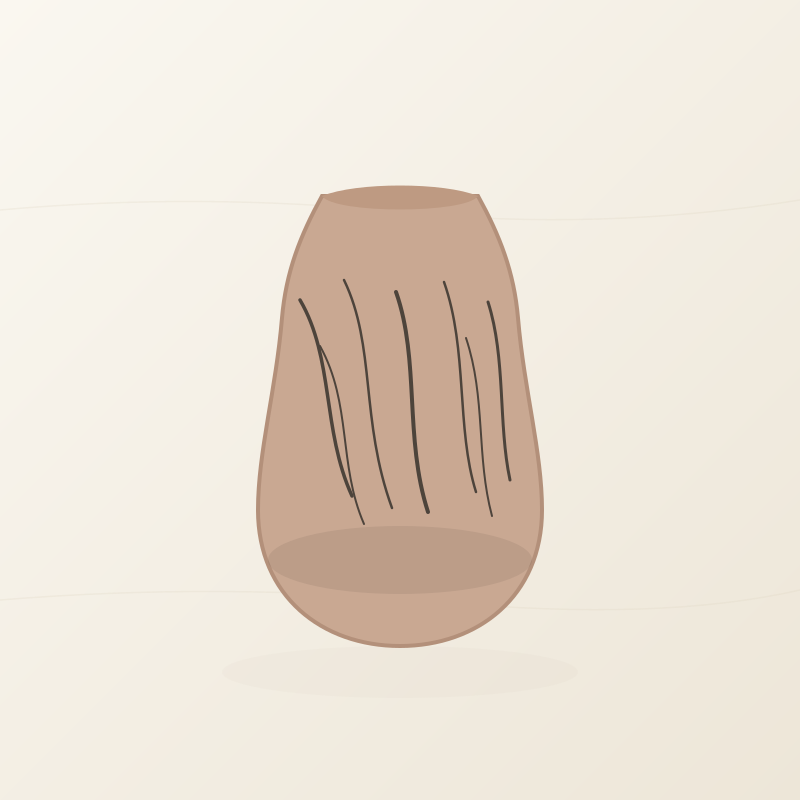
This is why keepsake vessels tend to be shaped like ordinary pottery. A lidded jar, a vase, a small bowl. Something a visitor would see as a nice piece of pottery, and that you know is more than that.
If a formal urn feels wrong to you, that is not a failure of respect. It is a reasonable preference, and there are plenty of alternatives.
Having a portion fired into pottery
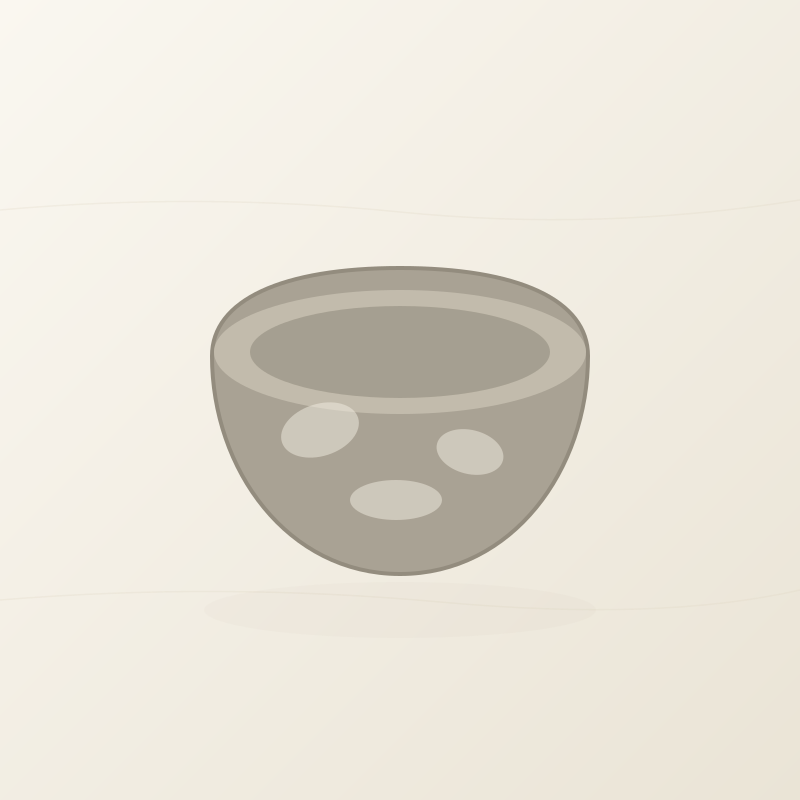
A small amount of ash — about a teaspoon — can be blended into a glaze and fired onto a piece of pottery. The ash becomes part of the surface rather than something sealed inside a container.
People choose this when they want something robust and everyday rather than something to be careful around. A bowl that lives on the kitchen windowsill. A small dish by the door. The remainder of the ashes goes wherever else you decide.
Because ash chemistry varies, the final colour shifts slightly from piece to piece, which means the result is specific to that horse.
Something you can wear
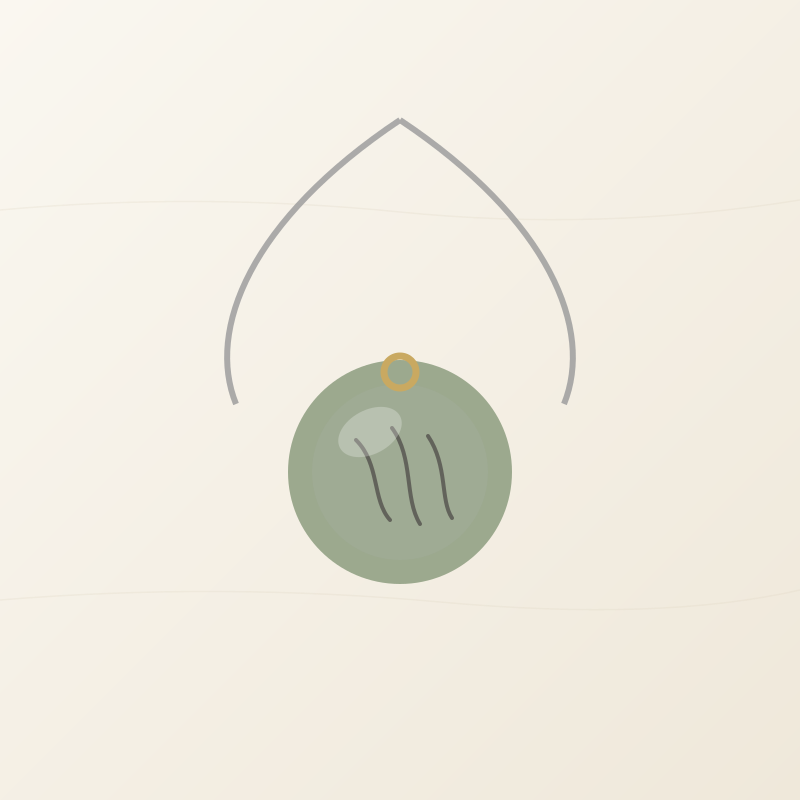
A pendant holding a small amount of ash or a few strands of hair is the quietest option on this list. It reads as an ordinary necklace, which is usually the point — people want to be able to wear it to work without being asked about it.
This is also the option people choose when they want to carry something rather than keep it in a room.
Dividing them between people
If a horse was shared — a family horse, a yard favourite, a loan horse with two sets of people who loved them — dividing the ashes between several small pieces lets everyone have something.
We have made sets of three and four vessels for exactly this reason. One person told us it was the first thing after the loss that felt like it helped rather than hurt.
Or nothing, for now
Leaving the box on the shelf while you work out what you want is a legitimate choice, not a failure to cope. Ashes do not deteriorate. There is no window closing.
The only thing we would gently suggest is this: if you think you might eventually want something made, put a small amount into a separate sealed bag now, and label it. Not because you have to decide, but because having the option already set aside is easier than going back to the main container in a year's time.
What we would tell a friend
Do the simple thing first. Scatter or bury the larger portion somewhere that means something, because that is the part people rarely regret.
Keep a small amount back. You can always decide later, and you cannot un-scatter.
And do not let anyone — including yourself — make you feel there is a right way to do this. The people we speak to who feel settled about it are not the ones who made the most elaborate choice. They are the ones who made a choice they actually wanted.
Questions
How much ash does a horse produce?
Considerably more than people expect — typically several kilograms, depending on the size of the horse. There is nearly always enough to scatter, keep, and have something made without those options competing.
Is it safe to post ashes?
Yes, when packed properly. Double-bag them in sealed plastic bags, place them in a rigid screw-top container, pad that inside a box, and use a tracked service. We confirm by email the moment a parcel reaches the studio.
How much ash do you need to make a piece?
About a teaspoon for an ash-glazed piece. We weigh what we use, return the remainder with the finished piece, and include a written note of exactly what went in.
Do I get the unused ashes back?
Always, without needing to ask. Anything not used in the piece is returned with it. We think you should never have to wonder what happened to the rest.
Can I use hair instead of ashes?
Yes, and many people prefer to. Hair from the mane or tail works for horsehair pottery and for keepsake pendants, and it can be taken while a horse is still alive. If you have both, you can use either or both.
How long do I have to decide?
As long as you want. Ashes keep indefinitely, and hair stored dry keeps for decades. People come to us months and sometimes years afterwards, and that is completely normal.
Thinking about a memorial piece?
Tell us about them and we will reply within two business days. Nothing is charged, and it commits you to nothing.