How Horsehair Pottery Is Made
The markings are not drawn, etched or printed. They are the hair itself, burned into the clay at 1000F. Here is exactly how that happens, stage by stage.
If you have seen a piece of horsehair pottery, you have probably wondered how the markings got there. They look drawn on, or etched, or somehow printed. They are none of those things.
What you are looking at is the hair itself, burned permanently into the surface of the clay. Here is how that actually happens.
It starts with the hair
We need very little. A bundle of mane or tail hair about the thickness of a pencil, four inches or longer, is enough for a vessel with plenty to spare.
We deliberately ask for more than one piece requires. Firing is never entirely predictable, and having a margin means a difficult day at the kiln does not become a conversation about hair that cannot be replaced. Whatever is not used comes home with the finished piece.
Age is rarely a problem. Hair kept dry in a sealed bag for twenty years usually fires beautifully. We have worked with hair taken from horses who died decades ago, and with hair from horses who are still very much alive.
The piece is formed and dried
The vessel, ornament or tile is shaped by hand. Then it dries — slowly, and for longer than most people expect. A vessel can take two weeks before it is ready for the kiln.
This is the part that cannot be hurried. Clay that goes into a kiln still holding moisture will crack, or in the worst case explode and take the rest of the kiln load with it. Most of the four to six weeks a commission takes is simply waiting for water to leave clay.
The first firing
The dry piece is bisque fired. This converts the clay permanently from something that could be returned to mud into something that cannot. After this point, the form is fixed.
What comes out is pale, chalky, slightly porous, and completely unremarkable to look at. It is also exactly what the next stage needs.
The hair goes on while the piece is glowing
This is the part people come to watch.
The piece goes back into the kiln and is brought up to around 1000°F — hot enough to glow a dull orange. Then it comes out, and while it is still radiating that heat, the hair is laid onto the surface by hand, strand by strand.
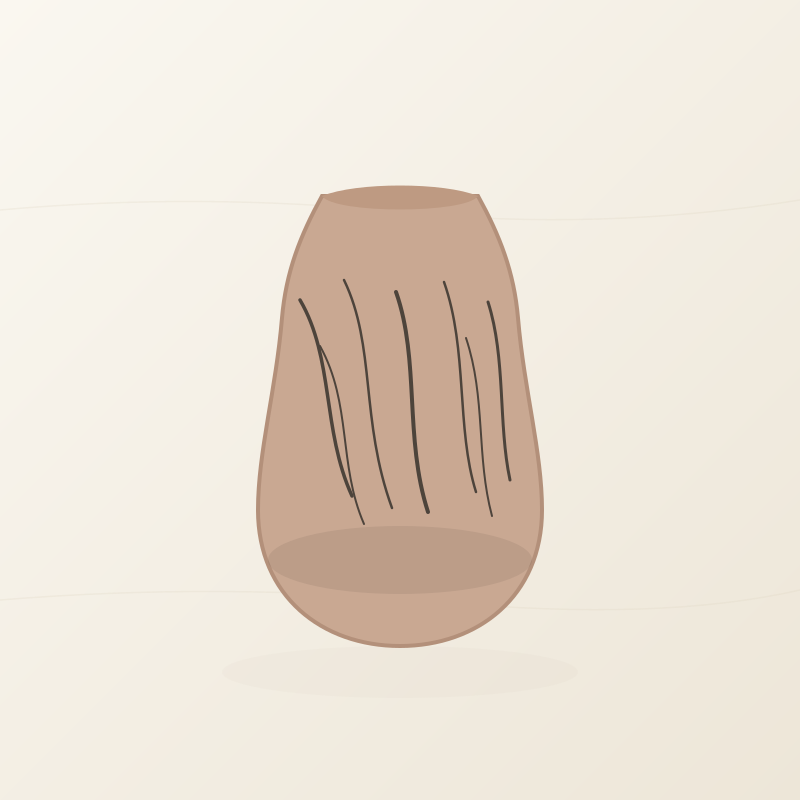
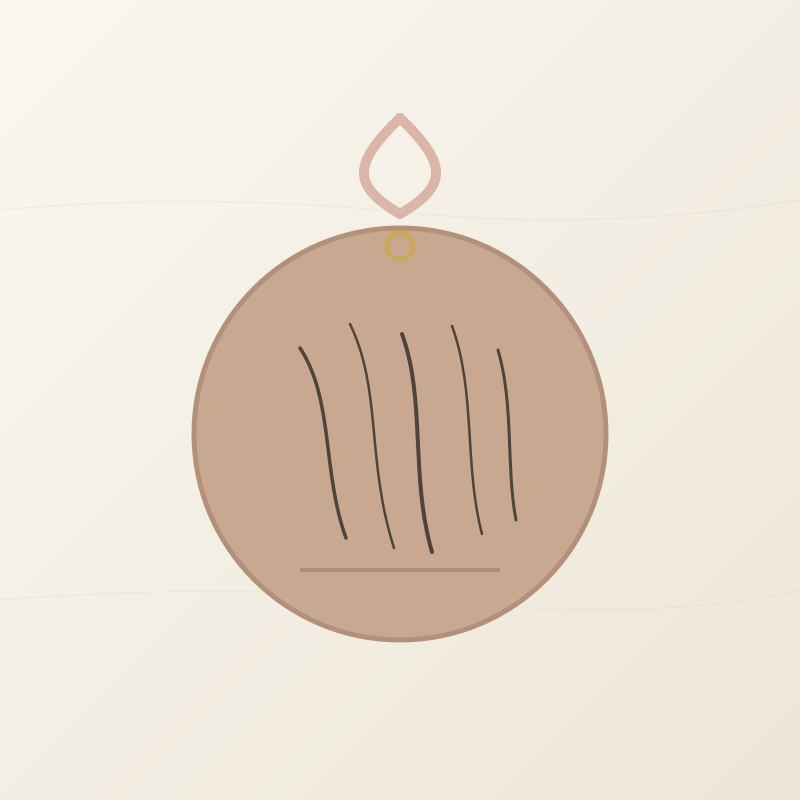
The hair does not sit on the clay. It carbonises on contact, instantly, with a small sound and a thread of smoke. What it leaves behind is a dark line burned into the surface — the carbon from the hair itself, fused permanently into the clay.
You get a few seconds per strand before the piece cools past the temperature where this works. It is hot, fast, slightly theatrical work, and it is the only stage of the whole process that cannot be redone.
Why no two pieces can ever match
Every strand behaves differently depending on how thick it is, how it lands, exactly how hot that part of the surface is, and which way the air is moving in the studio at that moment.
The result is a pattern that genuinely cannot be planned, repeated or recreated — not by us, not by anyone. Two pieces made from the same horse's tail on the same afternoon will not look alike.
We mention this before every commission, because people sometimes arrive with a photograph and ask for that pattern. We cannot make that pattern. We can only make a pattern, from their horse's hair, and it will be the only one of its kind in the world.
Finishing and the final firing
Once cooled, the piece is sealed and fired a final time. The markings are already permanent by this point — sealing protects the surface and gives it the finish you feel when you pick it up.
After this, the hair cannot rub off, fade, wash away or be damaged by water. The piece needs no special treatment. Dust it like any other pottery.
What you get, and when
We photograph every finished piece and send it to you before it ships. If you would like to see the hair being laid on, we can film that stage too — a surprising number of people tell us that part mattered as much as the piece.
Typically four to six weeks from the day the hair reaches us, plus posting. Any remaining hair comes back with it, along with a note of what was used.
Questions
Does the hair actually stay in the pottery?
Not the hair itself — the carbon from it. The hair burns away in the instant it touches the hot clay, and what remains is the mark it made, fused into the surface. That mark is as permanent as the pottery around it.
Can you use hair from a horse that is still alive?
Yes, and plenty of people do. Cut rather than pull, take from underneath the tail where it will not show, and store it somewhere dry and dark. It keeps for decades, and many owners prefer having it put aside long before they need it.
What happens if a piece breaks in the kiln?
It is uncommon but it does happen, which is exactly why we ask for spare hair. If a piece fails we tell you the same day and remake it at no additional cost.
Can you make horsehair pottery from dog or cat hair?
Yes. Pet hair is finer and tends to leave softer, lighter markings than horsehair, which some people prefer. A small pinch is plenty, and brushings work perfectly well.
How much does a horsehair piece cost?
Most commissions fall between $85 for a small ornament or pendant and $350 for a larger vessel. We confirm the price before any work begins, and nothing is charged when you first enquire.
Thinking about a memorial piece?
Tell us about them and we will reply within two business days. Nothing is charged, and it commits you to nothing.